
Nail file guide – Which one to use and when?
A nail file is one of the most essential tools in any manicure or pedicure routine. While choosing one may seem simple at first, there are actually significant differences between the various types, shapes, and grit sizes. Selecting the right file is not only key to achieving beautiful results but also crucial for maintaining long-term nail health.
What Does the Grit Number Mean?
When choosing a nail file, you’ve probably noticed the numbers printed on them (e.g., 80/100, 180/240). These indicate the grit size, or the coarseness of the file’s surface.
- The smaller the number, the coarser the file, making it suitable for stronger materials.
- The larger the number, the finer the file, making it gentler on the nails.
For example: an 80 grit file is very coarse and is mainly used for shaping artificial nails. A 240 grit file, on the other hand, is much finer, making it ideal for shaping or preparing natural nails.
Types of nail files and their uses
1. Coarse files (80–100 grit)
These are among the strongest nail files. They are mainly used for shortening artificial nails and removing strong materials such as gel or acrylic. Important: never use them on natural nails, as the coarse surface can easily damage or thin the nail plate.
2. Medium files (150–180 grit)
Medium-grit files are among the most versatile tools. They are ideal for shaping gel or acrylic nails and refining thicker layers. The 180 grit is already gentle enough to be used carefully on natural nails for shaping – but always use light, controlled movements to avoid weakening the nail.
3. Fine files (240 grit and above)
Fine-grit files are the best friends of natural nails. They are perfect for gentle shaping, slight buffing, and preparing the surface before artificial nail application. Their advantage is that they are gentle on the nails, making them highly recommended for beginners as well. They can be used safely without damaging or thinning the nail plate.
4. Buffers and polishing files
Buffers and polishing files (e.g., Buffer - Pink Ombre) are not meant for classic shaping. Instead, they are used for smoothing the nail surface, adding shine, and removing minor imperfections. If you prefer a natural look, a polishing file alone can give your nails a beautiful, glossy finish without nail polish – leaving your manicure looking clean and elegant with no extra products needed.
Which shape of nail file should you choose?
Nail files differ not only in grit size but also in shape. The right design makes your work easier and ensures more precise results.
- Straight file – Perfect for accurate shaping and creating straight lines. A classic choice that works well for both natural and artificial nails.
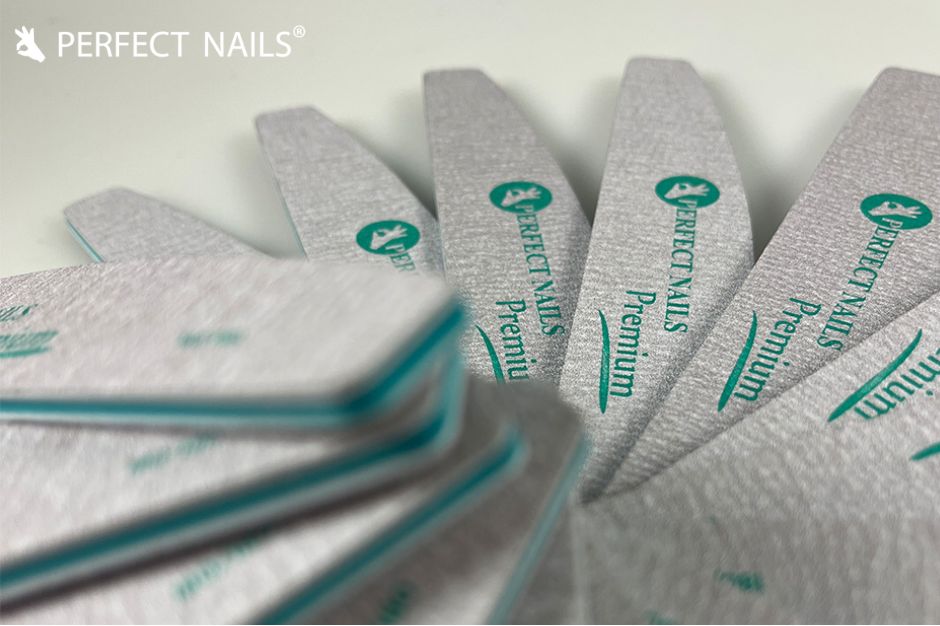
- Banana (curved) file – With its curved design, it’s more comfortable to use along the sides of the nails and allows for smoother, natural motions.
- Buffer block – A versatile tool that can be used for filing, buffing, and polishing all in one. Especially useful for preparing the nails and creating a uniform surface.
Tips for proper nail file use
- Always file in one direction! Filing back and forth can cause the nail plate to split and break. Gentle, one-way strokes are much kinder to your nails.
- Be careful with coarse files! Don’t apply too much pressure with these, as they can weaken the nail structure over time, especially if used on natural nails.
- Don’t forget to replace them! Worn-out files are not only less effective but can also damage the nail surface. It’s best to replace them regularly.
- Keep separate files for each purpose! Have dedicated files for natural nails and artificial nails to ensure you always use the right tool and avoid unnecessary damage.
When choosing a nail file, always consider whether you are shaping natural nails or artificial ones, and select the appropriate grit level and shape accordingly. This way, not only will the result look better, but your nails will also stay healthy.
Author:
Ágnes Zsoldos

